Menopause presents a variety of symptoms, but it’s not the same for everyone.
According to an article from Wellbeing of Women (full article here), 80% of the 4.3 million working women aged 45-60 in the UK (data from Oct 2020) “will experience some symptoms and a third will experience severe symptoms such as hot flushes, insomnia and low mood”. So it seems to a good idea to get familiar with the possible changes that might be heading our way.
The NHS website points out that the “first sign…is usually, but not always, a change in the normal pattern of your periods, for example they become irregular.”
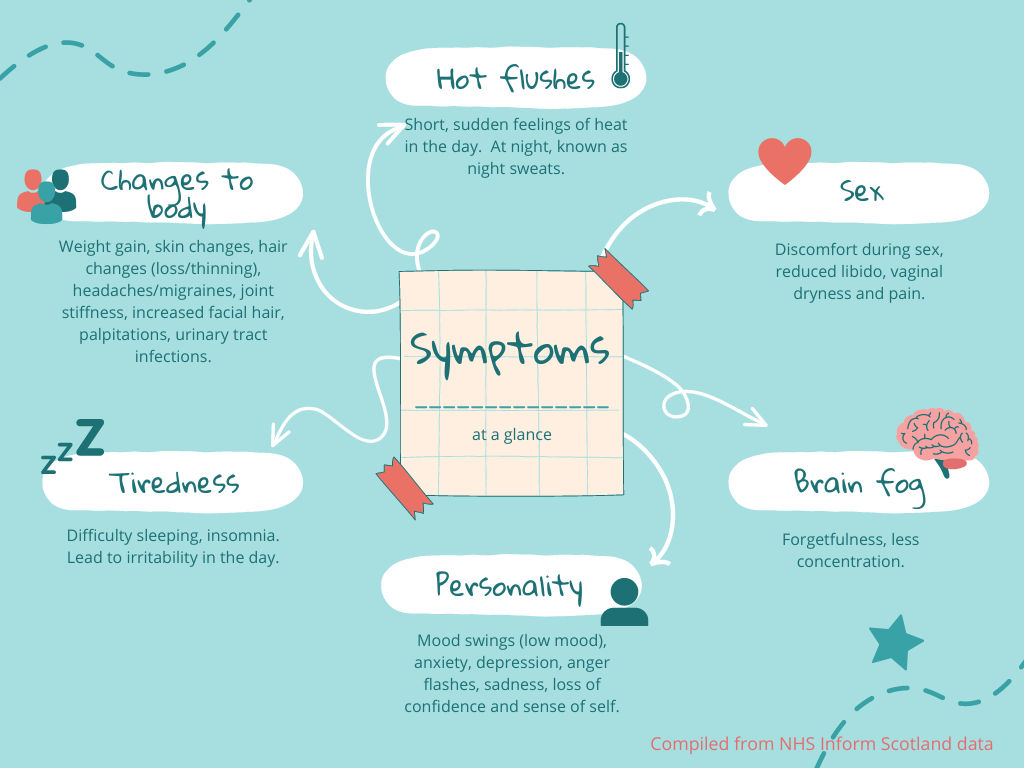
According to Dr Louise Newson (full interview here) she says many women “have menopausal symptoms – still having periods – but they’re changing in nature…and this can occur for a decade or so before periods stop”.
Whilst the average age for menopause in the UK is 51, Dr Newson went on to say that most women are perimenopausal in their 40s. This isn’t a true for everyone, and menopausal symptoms can start much earlier for some women. What is important is identifying what’s different for you. Are there changes you have noticed about your body that can’t be attributed to lifestyle or other external factors?

For more on perimenopause, check out The Menopause Charity website here, which gives clear advice and information.
What can I do about my menopausal symptoms?
Well, first up, keep a track of the changes. Perhaps buy a diary to write down symptoms and feelings. Alternatively, there are Apps available to track symptoms too. For example, (and not limited to) Clue and Balance – both of which are free.
The Menopause Charity also have a questionnaire you can download and print for yourself (link here). The questionnaire asks over 20 questions asking you to score and give a potential comment. The charity suggests filling out the questionnaire regularly to help give you a clear indication of changes or new symptoms. These symptoms can also change as your hormone levels alter over time.
Armed with this information, this should allow women to understand more and even have the confidence to diagnose themselves. When seeing a GP, with this info in hand, you can ask the right questions and start the conversation about menopause. Hopefully, this will lead to less women being misdiagnosed.
The Menopause Charity report that low mood is frequently misdiagnosed as depression and treated with antidepressants. “Low mood is a common symptom of the menopause, but there’s no evidence that antidepressants will help ease menopause-related symptoms”. Lisa Snowdon initially took antidepressants, believing at 42, she was too young to experience symptoms. Even MP, Carolyn Harris, took antipressants for 12 years, whilst eventually realising her symptoms were caused by the menopause. For more on both these stories, see the Look Who’s Talking page.
Should I let my employer know about menopause?
YES! Don’t be forced out of a job you love by struggling to cope alone with your menopause symptoms at work. You should not have to reduce your hours, give up on a promotion you’ve worked hard for, or quit because of the menopause.
An article in the Guardian from January 2022 (click here for full article), stated that more than 1 million women could be forced out of their jobs in 2022 due to lack of workplace support for the menopause. It can be difficult or even embarrassing to have ‘the’ chat with your employer, but why should we suffer alone?
The Guardian quoted Gillian Archibald as saying:
“I don’t think employers have any idea how debilitating and soul-destroying it is for women who have worked their entire lives and want to continue working to feel a shadow of their former selves, but to not receive any meaningful support to keep working.”
Why not point your employer in the direction of the Workplace Pledge? More employers are signing up, such as Tesco, Co-Op, the Royal Mail, TSB and over 2000 companies. This means these companies acknowledge they need to provide support, training and even changes to uniforms.
“This is why we are calling on employers to sign the Menopause Workplace Pledge and take positive action to make sure everyone going through the menopause is supported”. (Source Well Being of Women)
Alternatively, try ACAS for more info. ACAS also has training and events about menopause in the workplace.
Talk to family and friends to create support
https://www.bupa.co.uk/newsroom/ourviews/support-menopause